
The Ironclad Lease: Key Clauses Every Ontario Landlord & Tenant Needs in 2026
Book Consultation Book Consultation
07
FebThe Ironclad Lease: Key Clauses Every Ontario Landlord & Tenant Needs in 2026
Introduction: The Standard Lease is Just the Skeleton
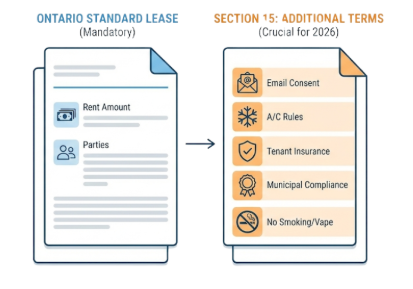
In Ontario, using the Standard Form of Lease (2229E) is mandatory. If you are a landlord and you try to use a generic "office store" lease, your tenant can legally withhold one month's rent until you provide the Standard Lease.
However, the Standard Lease is intentionally bare-bones. It covers the basics—rent amount, names, and address—but it leaves massive gaps regarding day-to-day conflicts like air conditioning, liability insurance, and communication methods.
To truly protect yourself in the high-stakes environment of 2026 (with $1.5M mortgages and strict "renoviction" penalties), you need to utilize Section 15: Additional Terms. This is the only place where you can add custom rules, provided they don't violate the Residential Tenancies Act (RTA).
Here are the 7 essential clauses you must include in every Ontario residential lease in 2026.
1. The "Speed Dial" Clause (Consent to Service by Email)
Why you need it: In 2026, time is your most valuable asset. As we discussed in our previous posts, the new rules allow for a 7-day N4 notice for non-payment. However, if you have to mail that notice, you are legally required to add 5 days for delivery, effectively killing your speed advantage.
The Clause: You must check "Yes" in the Standard Lease section for email communication, but you should also add a specific clause in Section 15:
"The Tenant consents to the service of all notices and documents, including Notices of Termination (e.g., N4, N12) and LTB applications, via email at the address provided: [Tenant Email]. The Tenant agrees to check this email daily and notify the Landlord immediately of any changes."
The Result: You can hit "Send" on an eviction notice at 11:59 PM, and it is considered served that second.
2. The "Bill 97" Air Conditioning Clause
Why you need it: Following the implementation of Bill 97 (and subsequent 2025 regulations), tenants have a statutory right to install window AC units, but landlords have a right to ensure safety and collect seasonal fees.
The Clause: Do not leave this to a handshake. Your lease must specify:
*"The Tenant may install a portable or window air conditioning unit only with prior written consent, which shall not be unreasonably withheld. The Tenant agrees to:
- Use a professional installation method to prevent safety hazards or damage to window frames.
- Pay a seasonal electricity surcharge of $[Amount] per month from June to September (if electricity is included in the rent), based on the estimated usage of the device."*
The Result: You prevent dangerous DIY installations that fall out of windows, and you aren't left paying the hydro bill for a unit running 24/7 in July.
3. The "Material Term" Insurance Clause
Why you need it: Tenant insurance is not legally mandatory under the RTA, but you can make it a mandatory condition of the lease. In 2026, with liability costs skyrocketing, you cannot afford a tenant who floods the unit below and has no coverage.
The Clause:
"The Tenant agrees to obtain and maintain a comprehensive tenant liability insurance policy with a minimum coverage of $2,000,000. Proof of this policy (Certificate of Insurance) must be provided to the Landlord prior to key release and annually upon renewal. Failure to maintain insurance is considered a breach of a material term of this agreement."
The Result: If they let their policy lapse, you have grounds to issue an N5 notice for substantial interference/breach of contract.
4. The "Brampton Compliance" Clause (For Peel Landlords)
Why you need it: If you are renting out a basement in Brampton or Mississauga, you are subject to the strict Residential Rental Licensing (RRL) rules we discussed previously. You need the tenant's cooperation to pass inspections.
The Clause:
"The Tenant acknowledges that the rental unit is subject to municipal licensing. The Tenant agrees to cooperate with all municipal inspections required for the renewal of the Residential Rental Licence, including maintaining the unit in a condition that complies with Fire Code and Property Standards bylaws (e.g., keeping exits clear of obstruction)."
The Result: If a tenant blocks an egress window with a dresser and causes you to fail an inspection (and get fined $750), you have a documented breach of the lease to use in your defense or eviction filing.
5. The "Smoke & Vape" Shield
Why you need it: "No Smoking" is standard, but in 2026, you must be specific about what is being smoked and where. The smell of cannabis is the #1 cause of "loss of reasonable enjoyment" complaints between neighbors.
The Clause:
"The entire premises, including the rental unit, balcony, patio, and common areas, is designated as 100% smoke-free. This prohibition applies to the smoking, vaping, or combustion of tobacco, cannabis, or any other substance. Cultivation of cannabis plants within the unit is strictly prohibited due to humidity and mould risks."
The Result: You protect your property from smoke damage (which costs thousands to fix) and prevent mold issues from indoor "grow ops."
6. The "Unauthorized Occupant" Distinction
Why you need it: You cannot ban guests. The RTA is clear: a tenant can have their boyfriend/girlfriend stay over every night if they want. However, you can limit overcrowding based on Fire Code/Insurance standards.
The Clause:
"The Tenant agrees that the unit is to be occupied by the persons named in this agreement. While guests are permitted, any person staying for more than [e.g., 14] consecutive days without Landlord consent may be deemed an unauthorized occupant if their presence results in overcrowding contrary to municipal bylaws or insurance capacity limits."
The Result: This is a tricky legal area, but having the clause helps you argue against "overcrowding" if 6 people move into a 1-bedroom basement.
7. The "Payment Agreement" (PAD/E-Transfer)
Why you need it: You cannot force a tenant to pay by post-dated cheques or pre-authorized debit (PAD). But, you can offer it as an option that they agree to.
The Clause:
"The Tenant agrees to pay rent via [e.g., Interac E-Transfer] to [Email Address]. Rent is due on the 1st of the month. If the Tenant chooses to provide post-dated cheques, they acknowledge this is done voluntarily for their convenience."
The Result: It creates a clear, written record of the agreed payment method, preventing the "I thought I could pay cash" excuse.
Summary: Don't DIY Your Legal Defense
In 2026, a lease is not just a receipt; it is your shield.
Many landlords download the Standard Lease, sign it, and think they are done. That is a mistake. The Standard Lease protects the tenant. Section 15 protects the landlord.
If your current lease doesn't have these clauses, you cannot unilaterally add them now. However, you can (and should) include them in any new tenancy agreements moving forward.
Need a Custom Lease Review? Don't guess. The real estate team at [Your Law Firm Name] can draft a custom "Schedule A" (Section 15) for your specific property, ensuring you are compliant with the latest 2026 RTA amendments and Brampton bylaws.
Contact us today to bulletproof your next tenancy.
Disclaimer : The information provided in this blog is for general informational purposes only and should not be considered legal, tax, financial, or professional advice. Regulations and procedures may change over time and vary by jurisdiction. For guidance tailored to your specific situation, please consult a qualified professional.