
Appraisal Shortfalls in Pre-Construction Real Estate: What Buyers in Ontario Need to Know
Book Consultation Book Consultation
13
OctAppraisal Shortfalls in Pre-Construction Real Estate: What Buyers in Ontario Need to Know
Pre-construction real estate has long been marketed as a way for buyers to lock in a home at today's prices, with the promise of equity growth by the time the project is completed. But what happens when the market shifts and the property is worth less than what the buyer agreed to pay years earlier?
This situation — known as a pre-construction condo appraisal gap, or an appraisal shortfall — has become increasingly common across Ontario. For buyers facing closings on pre-construction units today, appraisal shortfalls are not just a financial inconvenience. They can derail closings, trigger legal disputes, and put entire family investments at risk.
This guide explains why appraisal shortfalls happen, what options buyers have, and how a real estate lawyer can help negotiate or litigate a solution.
What Is an Appraisal Shortfall?
An appraisal shortfall (or appraisal gap) occurs when a lender's appraisal of a pre-construction property, completed near closing, comes in lower than the purchase price the buyer agreed to years earlier in the Agreement of Purchase and Sale.
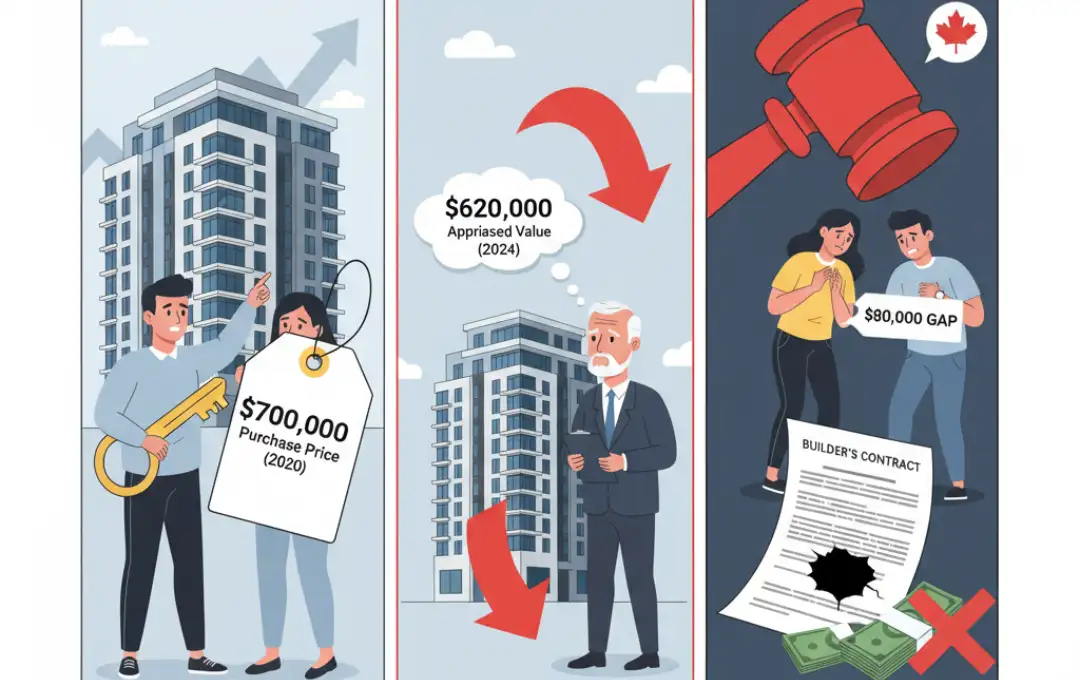
For example: a buyer agrees in 2021 to purchase a pre-construction condo for $700,000, with closing scheduled for 2026. By closing day, the unit's appraised market value has fallen to $620,000. The buyer's mortgage lender will only finance against the appraised value, not the original contract price. That leaves an $80,000 gap the buyer must cover out of pocket — money many buyers simply don't have on hand.
This is different from financing falling through entirely. The buyer may still qualify for a mortgage; the problem is that the mortgage amount the bank is willing to lend no longer matches what the contract requires the buyer to pay.
Why Are Appraisal Shortfalls Happening Now?
Several overlapping market conditions are driving the rise in appraisal shortfalls across the GTA and broader Ontario market:
- Multi-year closing timelines: Pre-construction contracts are often signed 3 to 5 years before closing. A lot can change in the housing market over that window, and the contract price reflects conditions at signing, not at closing.
- Cooling resale and new-build prices: In a softening market, comparable units sell for less than they did when the original contract was signed, which directly lowers appraised values.
- Higher interest rates tightening lender appetite: Lenders apply stricter qualification standards in a high-rate environment, and appraisals tend to be more conservative as a result.
- Oversupply: An oversupply of newly completed inventory in some submarkets puts downward pressure on what comparable units are actually selling for.
- Builder price drops: Builders releasing new phases or units at lower prices than what earlier buyers locked in pulls down the comparable sales an appraiser relies on.
The combined result is that many buyers are locked into contracts priced above today's market value, with no built-in mechanism in the contract to adjust for it.
Builders' Stance on Appraisal Shortfalls
One of the most frustrating aspects for buyers is that builders rarely show flexibility, even when the facts seem to favour the buyer. It is not unusual for a builder to be actively marketing and selling nearly identical units in the same building at a lower price, while still expecting an earlier buyer to close at the full original contract value.
This is not an oversight — it reflects how pre-construction agreements are drafted. The standard Agreement of Purchase and Sale almost always locks the buyer into closing at the agreed price regardless of what happens to market conditions in the years between signing and closing. The risk of a market downturn is, contractually, placed on the buyer. Builders are generally under no legal obligation to renegotiate price simply because the market has moved, which is why buyers often need a lawyer to identify any other leverage available in the contract.
Legal Remedies and Buyer Strategies
So what can a buyer actually do when facing a pre-construction condo appraisal gap? There are four main paths, and they are not mutually exclusive — a real estate lawyer will often pursue more than one in parallel.
1. Negotiate with the Builder
Negotiation is usually the fastest and least costly route, and it typically happens lawyer-to-lawyer rather than buyer-to-builder directly. A buyer's lawyer can approach the builder's legal team to request concessions such as:
- A reduced purchase price, particularly if the builder is selling comparable units for less.
- A closing extension to give the buyer more time to arrange financing.
- Builder-provided financing or a vendor take-back mortgage for part of the shortfall.
- Deferral of certain closing adjustments or fees to ease the cash needed at closing.
Builders won't always agree, but a well-documented request — backed by comparable sales evidence — gives the buyer the best chance of a favourable outcome without litigation.
2. Explore Alternative Financing
If the primary lender will not finance beyond the appraised value, buyers still have options to close the gap, including:
- A second mortgage or private lender to cover the difference between the appraised value and the contract price.
- Tapping into other assets, such as a home equity line of credit.
- Bringing in a co-signer or guarantor to strengthen the mortgage application.
- Working with a mortgage broker who has access to lenders with more flexible appraisal standards.
These solutions can be costly, particularly private or second-mortgage financing, but they can bridge the gap and allow the closing to proceed without triggering default.
3. Litigate
If a builder is advertising comparable units for less but refuses to adjust an earlier contract, and negotiation and financing options aren't enough, some buyers choose to litigate. Litigation in this context may involve:
- Challenging specific clauses in the Agreement of Purchase and Sale, including disclosure obligations.
- Seeking specific performance or damages if the builder has acted in bad faith.
- Defending against a builder's claim for damages if the buyer cannot close.
- Reviewing whether proper disclosure was made about pricing, unit specifications, or material changes to the project.
Litigation is complex, expensive, and unpredictable, but in cases involving significant sums or clear builder misconduct, it may be the only realistic avenue left.
4. Walk Away (with Consequences)
If the shortfall is too large to bridge through negotiation or financing, some buyers simply cannot close. This is the harshest outcome. If a buyer fails to close, the builder may:
- Retain the buyer's deposit.
- Resell the unit and sue the buyer for any shortfall between the resale price and the original contract price, plus carrying costs.
- Pursue the buyer for legal costs associated with the failed closing.
Because the financial consequences of walking away can be severe and can follow a buyer for years, this option should only be considered after a lawyer has reviewed the contract and confirmed there is genuinely no better path forward.
How a Real Estate Lawyer Can Help
Appraisal shortfalls are not just financial issues — they are legal issues governed by the specific wording of the Agreement of Purchase and Sale. A real estate lawyer in Brampton or elsewhere in Ontario can provide critical guidance, including:
- Reviewing the contract for clauses related to price adjustments, financing conditions, and default.
- Negotiating directly with the builder's legal counsel for concessions or extensions.
- Advising on alternative financing structures and their legal implications.
- Representing the buyer in litigation if the matter cannot be resolved through negotiation.
- Explaining the realistic financial exposure of walking away versus closing.
Without legal advice, buyers risk losing not only their deposits but also being held liable for large financial judgments if the builder resells the unit at a loss.
Due Diligence Before Signing Pre-Construction Contracts
For future buyers, the lesson from today's appraisal shortfalls is clear: pre-construction contracts should never be signed without legal review. Key clauses to watch for include:
- Price adjustment and de-escalation clauses (rare, but worth checking for).
- Financing conditions and how strictly they protect the buyer if a mortgage falls through.
- Outside closing date provisions and what happens if the project is delayed.
- Assignment clauses, which determine whether the buyer can sell the contract before closing if circumstances change.
- Disclosure and material change provisions, which govern what rights a buyer has if the builder alters the project after signing.
A real estate lawyer can identify these risks before signing and advise whether the deal is worth proceeding with given the buyer's financial position and risk tolerance. This kind of upfront legal review is also covered in more depth in our guide to pre-construction legal risks in Ontario, including how deposit protection and cancellation rights work before you ever reach the closing table.
Practical Tips for Buyers Facing Appraisal Shortfalls
- Get an independent appraisal early, well before your closing date, so you have time to plan rather than react.
- Speak to a mortgage broker about lenders with more flexible criteria before assuming financing is impossible.
- Gather evidence of comparable unit sales, including any units the builder is currently selling at a lower price.
- Contact a real estate lawyer as soon as a shortfall looks likely — not after the closing date has already passed.
- Understand exactly how your deposit is protected and what happens to it if the deal cannot close; our overview on how real estate deposits are held in trust explains the legal protections in place.
- Review your specific contract for any closing-related risks before assuming you have no options; see our broader breakdown of why real estate deals fail to close in Ontario and the remedies available to both buyers and sellers.
Frequently Asked Questions
What is a pre-construction condo appraisal gap?
A pre-construction condo appraisal gap is the difference between the price a buyer agreed to pay in their Agreement of Purchase and Sale and the lower value a lender's appraiser assigns the unit closer to closing. The buyer must cover this gap out of pocket, since lenders will only finance up to the appraised value.
Can a builder be forced to lower the price if there's an appraisal shortfall?
Not automatically. Pre-construction contracts typically lock in the buyer at the agreed price regardless of market changes, and builders are generally not legally obligated to renegotiate. Some builders will agree to concessions voluntarily, particularly when there's clear evidence of comparable units selling for less, but this usually requires negotiation through a lawyer.
What happens if I can't close because of an appraisal shortfall?
If you cannot close, the builder may retain your deposit, resell the unit, and pursue you for any shortfall between the resale price and your original contract price, plus carrying costs and legal fees. Speak with a real estate lawyer before assuming you have no choice but to walk away.
Is my deposit protected if I can't close due to an appraisal gap?
Deposit protection depends on the specific terms of your contract and applicable Tarion or trust account rules, not on the appraisal shortfall itself. If you fail to close for reasons unrelated to a builder breach, your deposit is generally at risk of forfeiture, which is why early legal advice matters.
Final Takeaway
Appraisal shortfalls on pre-construction deals are becoming increasingly common in Ontario's cooling market. Builders are often unwilling to adjust pricing, even when they are selling similar units for less. Buyers are left with a narrow set of options: negotiate, find alternative financing, litigate, or walk away.
The most important step is to involve a real estate lawyer as soon as a pre-construction condo appraisal gap looks likely. A real estate lawyer in Brampton or elsewhere in the GTA can negotiate with builders, advise on financing, and defend against litigation if needed. With proper legal guidance, buyers can make informed decisions and minimize losses in a challenging market.
Pre-construction purchases may look like bargains at the outset, but without legal safeguards, they can become financial traps. In today's market, legal advice is not optional - it's essential. Book a free consultation with GS Arora Law to review your contract before your closing date puts you at risk.
Disclaimer: The information provided in this blog is for general informational purposes only and should not be considered legal, tax, financial, or professional advice. Regulations and procedures may change over time and vary by jurisdiction. For guidance tailored to your specific situation, please consult a qualified professional.