
HST Registration, Filing & Input Tax Credits for GTA Businesses in 2026
Book Consultation Book Consultation
10
DecHST Registration, Filing & Input Tax Credits for GTA Businesses in 2026
Introduction: It’s Not Your Money
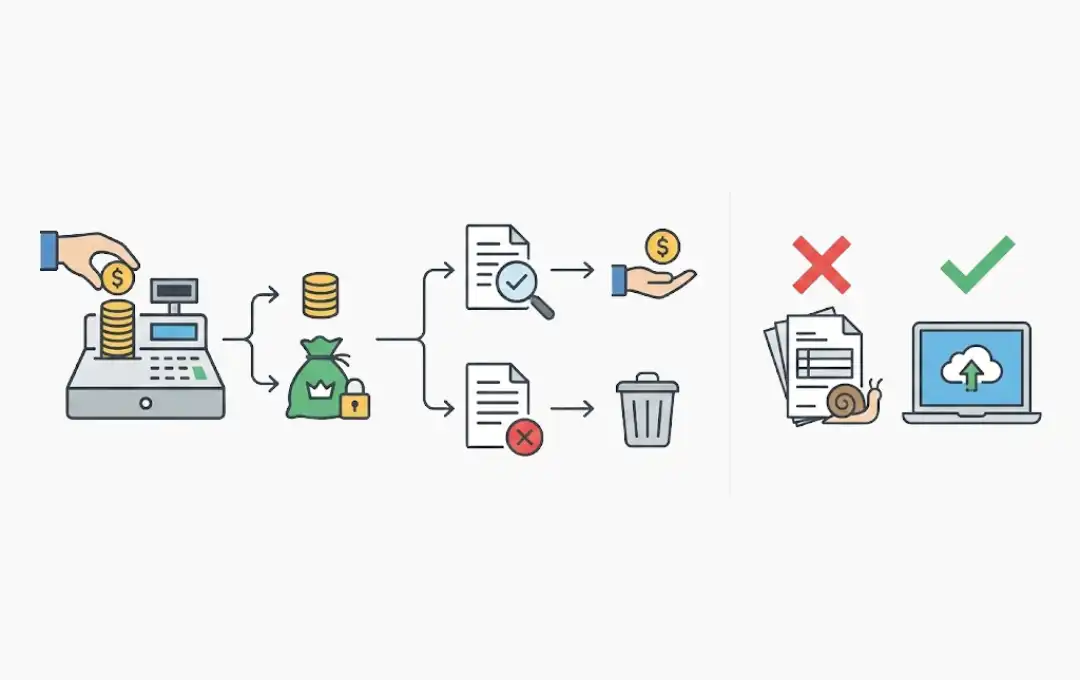
For business owners in Toronto, Brampton, and across the GTA, the Harmonized Sales Tax (HST) is often the most misunderstood part of their cash flow. When a client pays you $113 for a $100 service, that extra $13 never belonged to you. You are simply an unpaid tax collector on behalf of the government.
Yet HST is also where many small businesses unknowingly leave money on the table — or trigger a costly audit. In 2026, the CRA continues to enforce mandatory electronic filing and expanded data-sharing rules for digital platforms. The “paper and shoebox” method of HST compliance is no longer viable for the vast majority of registrants.
This guide breaks down the essential rules of registration, how to properly maximize your Input Tax Credits (ITCs), and the compliance changes that matter most to Ontario businesses right now.
1. Registration: The $30,000 Small Supplier Threshold
In Ontario, you are required to register for an HST number as soon as your total worldwide taxable revenues exceed $30,000 in a single calendar quarter, or over four consecutive calendar quarters combined.
The Small Supplier Trap
Until you cross that $30,000 threshold, you are classified as a Small Supplier and are not technically required to register.
The trap: if you don’t register, you cannot claim ITCs — meaning you cannot recover the HST you paid on your own startup costs.
The strategy: most businesses are better off registering voluntarily from day one. If you spend $10,000 on a laptop and office setup at the start of your business, voluntary registration lets you claim back the $1,300 in HST you paid on those purchases. Without registration, that $1,300 is simply gone — a sunk cost with no recovery mechanism.
2. Input Tax Credits (ITCs): Don’t Leave Money Behind
ITCs are the mechanism that lets businesses recover the HST paid on legitimate business expenses. They exist specifically to prevent “tax cascading” — being taxed on tax.
What You Can Generally Claim (The Reasonableness Test)
You can claim ITCs for HST paid on expenses that are reasonable for earning business income, including:
- Commercial rent
- Office supplies and equipment
- Professional fees — accounting and legal
- Subcontractor fees
- Fuel and vehicle costs, prorated for business use
The 50% Rule on Meals and Entertainment
This is consistently the #1 audit adjustment the CRA makes on small business files. You can only claim 50% of the HST paid on food, beverage, and entertainment expenses.
Example: You take a client to lunch for $100 plus $13 HST. You can only claim an ITC of $6.50 — not the full $13.00.
The Documentation Rule
The CRA is strict on this point. To claim an ITC, you must hold a valid invoice that includes:
- The supplier’s business name
- The date
- The total amount paid
- The supplier’s HST registration number — required for invoices over $30
Important: if a vendor charges you HST but fails to include their HST registration number on the invoice, you cannot legally claim the ITC, regardless of how much tax was actually paid.
3. What’s Changed and What Remains Proposed for 2026
A. Mandatory Electronic Filing Is Now Fully Enforced
The CRA has effectively eliminated paper filing for GST/HST returns for the vast majority of registrants.
The rule: unless you are a charity or a selected financial institution, you must file electronically through NETFILE or My Business Account.
The penalty: the CRA charges $100 for a first paper-filing offence and $250 for each subsequent one. If you are still mailing a paper GST34 return, stop immediately — this is one of the easiest and most avoidable penalties on the books.
B. The Joint Venture Election Expansion Remains Proposed, Not Yet Law
For real estate developers and joint ventures operating in the GTA, there is a significant reform still working its way through the legislative process. The federal government first released draft legislation for this expansion in November 2023, and as of 2026, these changes remain proposed rather than finalized law.
What the proposal would change: currently, only specific “prescribed activities” listed in the Joint Venture (GST/HST) Regulations qualify for the simplified election — where one designated “operator” handles all HST reporting on behalf of the joint venture. The proposed rules would replace this narrow list with a broader test based on whether “all or substantially all” of the joint venture’s activities are “commercial activities.” The proposal would also require the election to be formally filed with the CRA, rather than simply kept on file between the parties as under the current rules.
Practical takeaway: if your GTA property partnership is planning around this expanded election, confirm its status before relying on it — proposed legislation can change, be delayed, or be revised before enactment. Speak with your tax advisor about your current eligibility under the existing prescribed-activities rules in the meantime.
C. Digital Platform Reporting Continues to Expand
If you sell goods or services through platforms such as Uber, Airbnb, or Etsy, these platforms are required to report your income data directly to the CRA. If the HST revenue you report does not match the data the CRA receives independently from these platforms, expect a discrepancy letter — and potentially a full audit.
4. Filing Deadlines and the Trust Fund Doctrine
Missing a filing deadline is bad. Missing a remittance payment is worse — and carries personal consequences.
Deadlines by Filing Frequency
- Annual filers: Return and payment due 3 months after fiscal year-end (individuals filing personally have until June 15 to file, though payment remains due April 30).
- Quarterly or monthly filers: Due 1 month after the end of the applicable reporting period.
The Golden Rule: This Money Is Never Yours
HST you collect is legally deemed funds held in trust for the Crown, the moment you collect it. Directors of a corporation are personally liable for unpaid HST. Even if your corporation goes bankrupt, the CRA can — and regularly does — place a lien on a director’s personal home to recover unpaid HST that was never remitted. Corporate liability protection does not shield directors from this specific obligation.
If your business is facing a CRA dispute or assessment related to unpaid or disputed HST, see our guide on when to call a tax lawyer for CRA disputes in Ontario.
Conclusion: Compliance Is Cheaper Than Correction
In 2026, HST compliance comes down to rigorous digital hygiene: modern bookkeeping software, disciplined receipt capture, and a strict mental and financial separation between “your money” and “the government’s money.”
For GTA businesses, the cost of getting HST wrong — missed ITCs, miscalculated remittances, or personal director liability for unremitted tax — far outweighs the modest cost of getting the systems right from the start.
If you need guidance on HST registration, ITC eligibility, or resolving a CRA HST dispute, contact GS Arora Law to speak with our business law team.
Disclaimer: The information provided in this blog is for general informational purposes only and should not be considered legal, tax, financial, or professional advice. The GST/HST joint venture election expansion discussed in this article remains proposed legislation as of publication and has not been enacted into law. Regulations and procedures may change over time and vary by jurisdiction. For guidance tailored to your specific situation, please consult a qualified tax professional.