
Influencer Impact: Navigating the Legal Risks of Influencer and Affiliate Marketing for Ontario Businesses in 2026
Book Consultation Book Consultation
19
NovInfluencer Impact: Navigating the Legal Risks of Influencer and Affiliate Marketing for Ontario Businesses in 2026
Introduction: The Power (and Peril) of Digital Word-of-Mouth
In 2026, influencer and affiliate marketing remain indispensable tools for small businesses in Brampton and across the GTA. From micro-influencers showcasing products on Instagram to affiliate partners driving traffic to e-commerce sites, these strategies offer authentic reach and conversion rates that traditional advertising often cannot match.
However, the seemingly casual nature of social media endorsements hides a genuinely complex web of legal obligations. What looks like a personal recommendation to consumers can, in fact, be a paid advertisement — and both the business and the influencer carry strict obligations to disclose that relationship. Failing to comply with advertising standards, consumer protection law, and privacy regulations can result in serious penalties, reputational damage, and costly litigation.
For Ontario businesses building a digital marketing strategy around influencers or affiliates, understanding these legal risks is not just about avoiding fines — it’s about building genuine trust with your audience and protecting your brand long-term.
1. The Core Principle: Transparency and “Material Connection”
At the heart of every influencer and affiliate marketing legal requirement is one concept: disclosing any material connection between the endorser and the business.
What Counts as a Material Connection
A material connection is any relationship between an endorser (the influencer or affiliate) and your business that could reasonably affect how much weight or credibility a consumer gives to their endorsement. This includes:
- Payment: cash compensation for a post, video, or mention
- Free or discounted products: receiving the product being reviewed at no cost, or at a reduced price, in exchange for content
- Affiliate commissions: earning a percentage of sales generated through a personal link or discount code
- Employment or ownership relationships: the endorser being an employee, contractor, or part-owner of the business
- Family or personal relationships: endorsing a friend’s or family member’s business, even without direct payment
If any of these relationships exist, the connection must be clearly and conspicuously disclosed to the audience — regardless of how the influencer personally feels about the product, and regardless of whether they would have said the same thing without compensation.
2. Advertising Disclosures: Clear in Law, Tricky in Execution
In Canada, both the federal Competition Act and provincial consumer protection legislation — including Ontario’s Consumer Protection Act, 2002 — prohibit deceptive marketing practices, which explicitly includes failing to disclose a material fact. For influencer and affiliate marketing, that material fact is the commercial relationship itself.
A. What “Clear and Conspicuous” Disclosure Actually Requires
- Placement matters: a disclosure buried at the bottom of a long caption, hidden behind a “read more” cutoff, or placed only in a bio link is not considered clear and conspicuous.
- Plain language: terms like “#ad,” “#sponsored,” or “paid partnership” are generally accepted; vague terms like “#sp,” “#collab,” or “thanks to [brand]” alone are increasingly viewed as insufficient on their own.
- Platform-native disclosure tools: where a platform offers a built-in “Paid Partnership” tag (as Instagram and TikTok do), using it is strongly recommended — but it is generally not considered a substitute for disclosure within the content itself, since not every viewer sees platform metadata.
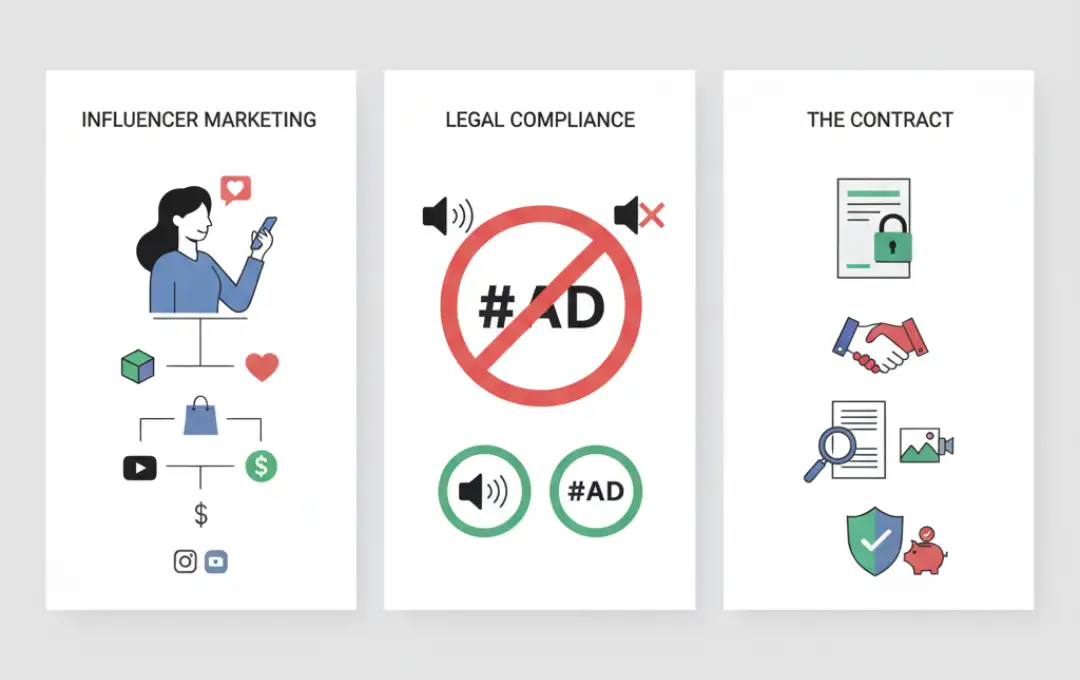
- Video and audio content: for video content, disclosure should appear both visually on screen and be mentioned verbally where practical, since viewers may skip sections or watch without sound.
B. Consequences of Non-Disclosure
- Competition Bureau enforcement: the federal Competition Bureau can investigate deceptive marketing practices and issue administrative monetary penalties, which for corporations can reach into the hundreds of thousands of dollars per violation under the Competition Act’s civil provisions.
- Provincial consumer protection claims: consumers misled by an undisclosed endorsement may have grounds for a complaint or claim under Ontario’s Consumer Protection Act.
- Reputational damage: undisclosed sponsored content that is later exposed by consumers or media tends to generate significantly more backlash than a properly disclosed partnership, since the perception of concealment compounds the underlying issue.
- Platform-level penalties: social platforms increasingly enforce their own advertising policies independently of government regulators, and can suspend or restrict accounts — both the influencer’s and, in some cases, the brand’s — for repeated non-disclosure.
3. Endorsement Guidelines: Beyond Just Disclosure
Disclosing the relationship is necessary but not sufficient. There are additional rules governing what an endorser can actually say about your product.
A. Truthfulness and Substantiation
- Claims must be truthful and not exaggerated. An endorser’s genuine opinion is protected, but factual claims about the product’s performance, ingredients, or results must be accurate.
- Your business must be able to substantiate any factual or scientific claim made in connection with your product before an influencer repeats it publicly — the same substantiation standard that applies to your own advertising applies to claims made on your behalf by an endorser.
- Results and testimonials must reflect typical experience, not a cherry-picked best-case outcome, unless the atypical nature of the result is clearly disclosed alongside it.
B. False or Misleading Representations
Your business is ultimately responsible under the Competition Act for ensuring an influencer’s claims about your product are not false or misleading — you cannot simply send a product and let the influencer say anything they want about it.
Example: an influencer claims your “organic” skincare line is “scientifically proven” to reverse aging, but your company has no scientific study supporting that claim. Both the influencer and your business can be held liable under the Competition Act’s false and misleading representation provisions — the influencer for making the claim, and your business for facilitating or failing to correct it.
4. The Essential Influencer and Affiliate Marketing Contract
For Ontario small businesses, a properly drafted contract with every influencer and affiliate partner is not optional — it is essential risk management. It clarifies expectations and creates a documented basis for compliance if either party’s conduct is later questioned.
Key Clauses Every 2026 Contract Should Include
- Mandatory disclosure clause: a contractual requirement that the influencer disclose the paid relationship in every piece of content, in the manner and placement your business specifies, with sample language provided.
- Content approval rights: the right to review and approve content before it is published, particularly where specific product or performance claims will be made.
- Substantiation and claims restrictions: a requirement that the influencer only make claims about the product that your business has pre-approved and can substantiate.
- Intellectual property and usage rights: clear terms on whether your business can repost, repurpose, or run paid ads using the influencer’s content, and for how long.
- Compensation structure: whether payment is flat-fee, commission-based, product-based, or a hybrid, and the specific triggers for affiliate commission payment.
- FTC/Competition Bureau compliance representation: a warranty that the influencer understands and will comply with Canadian disclosure obligations, not just platform community guidelines.
- Termination and content removal rights: the ability to end the relationship and require removal of sponsored content if the influencer breaches disclosure obligations or makes unauthorized claims.
5. Other Legal Considerations for 2026
- Privacy and data collection: if your affiliate program collects consumer data through tracking links or discount codes, ensure your privacy policy accounts for this data sharing and complies with Canadian privacy obligations. See our guide on website terms of use and privacy policies for Ontario small businesses.
- Contest and giveaway rules: influencer-hosted giveaways often trigger separate contest law requirements under Canadian law — including mandatory rules, odds disclosure, and skill-testing questions for certain contest structures — that are frequently overlooked when a giveaway is run informally through an influencer’s account.
- Cross-border influencers: if you work with influencers based outside Canada who reach a Canadian audience, both the Competition Act and the influencer’s home jurisdiction’s advertising rules may apply simultaneously.
- Record-keeping: maintain records of every influencer agreement, approved content, and substantiation for claims made, consistent with general CRA and consumer protection recordkeeping expectations for your business.
Conclusion: Ethical Marketing Is Good Business
Influencer and affiliate marketing continue to offer real growth opportunities for Ontario businesses in 2026. But the informal, conversational feel of these channels does not exempt them from Canada’s advertising and consumer protection laws — if anything, regulators have grown more attentive to this space precisely because of its rapid growth.
By building clear disclosure practices, ensuring every claim made on your behalf can be substantiated, and putting a properly drafted contract in place with every partner, Ontario businesses can use digital word-of-mouth marketing effectively while protecting themselves from regulatory action and reputational harm.
If you are building or reviewing your influencer and affiliate marketing program, contact GS Arora Law to speak with our business law team.
Disclaimer: The information provided in this blog is for general informational purposes only and should not be considered legal, tax, financial, or professional advice. Regulations and procedures may change over time and vary by jurisdiction. For guidance tailored to your specific situation, please consult a qualified professional.