
How Ontario Homeowners Can Protect Against Title Fraud and Identity Theft in 2026
Book Consultation Book Consultation
10
FebHow Ontario Homeowners Can Protect Against Title Fraud and Identity Theft in 2026
Imagine returning from a three-week vacation to find a stranger opening the door of your Brampton home. They are not a squatter. They are the legal owner — they bought it two weeks ago from a fraudster who stole your identity, engaged a real estate agent, and sold your property at 95% of market value to a cash buyer before you landed at Pearson.
This is not a hypothetical. In 2026, real estate title fraud is an established criminal industry in Ontario.
Title fraud is the theft of your property’s equity without a physical break-in. A fraudster uses stolen identity information to forge transfer documents, register a mortgage against your home, or sell your property outright — all through Ontario’s land registration system. With AI-generated identification and synthetic identities now widely used by organized fraud networks, every Ontario homeowner is a potential target regardless of how long they have owned their home.
This guide explains exactly how the fraud landscape has evolved in 2026 and the concrete steps every homeowner and landlord in Brampton and across the GTA must take to protect their title.
Part 1: How Ontario Title Fraud Has Evolved in 2026
Understanding the threat is the first step to defending against it. The methods fraudsters use in 2026 are materially different — and more sophisticated — than those of even five years ago.
AI-Enhanced Identity Theft and Synthetic Identities
In earlier years, a fraudster needed a fake driver’s licence convincing enough to pass casual inspection. In 2026, the threat is digital and significantly harder to detect. Criminals now use generative AI to create “synthetic identities” — combining real data stolen in corporate data breaches (your Social Insurance Number, date of birth, address history) with AI-generated facial images and fabricated supporting documents.
More sophisticated actors use deepfake video technology to impersonate homeowners on Zoom calls with lawyers and lenders, bypassing remote identity verification checks that rely solely on visual confirmation. The Law Society of Ontario has tightened its identification requirements in response, but the technology race between fraudsters and verification systems is ongoing.
Why Mortgage-Free Homeowners Are the Primary Target
The highest-risk profile in 2026 is a homeowner — often a senior or an absentee landlord — who owns their property without a mortgage. The reason is structural: when a property carries an institutional mortgage, the lender becomes an additional verification layer. A fraudster attempting to sell or re-mortgage a property with an existing institutional lender must satisfy that lender’s identity and authorization processes, dramatically increasing the complexity of the fraud.
A mortgage-free property has no such second line of defence. A fraudster who successfully impersonates the owner can register a private mortgage of $500,000 to $800,000 against the property and direct the funds offshore — or execute an outright transfer to a complicit buyer — with only the land registry system standing between them and the proceeds. If you own your home outright, you are among the highest-priority targets for organized fraud networks operating in Ontario.
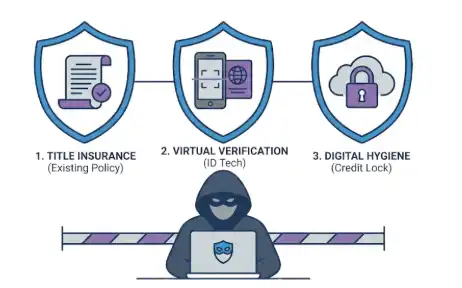
Part 2: The Three Pillars of Protection for Ontario Homeowners
You cannot prevent a fraudster from attempting to target your property. You can make yourself a structurally unattractive target and ensure that if fraud is attempted, the financial consequences are absorbed by insurance rather than your equity.
Pillar 1 — Title Insurance: Your Financial Safety Net
Title insurance is the single most important protection available to Ontario homeowners against title fraud, and it is available to existing homeowners — not just buyers at closing.
The Ontario Land Titles Assurance Fund (LTAF) does exist as a government backstop for fraud victims, but it operates as a true last resort with a complex, multi-year application process and no guarantee of full recovery. Title insurance is the practical alternative.
An Existing Homeowner’s Policy can be purchased for a home you have owned for any period of time — including decades. The one-time premium is approximately $300 to $500. What it covers is not: if title fraud is committed against your property, the insurer pays the legal fees to restore your title to your name — a process that routinely costs $50,000 to $150,000 in Ontario depending on the complexity — and covers any equity loss resulting from the fraud.
For a full analysis of what title insurance covers and the specific exclusions to understand, our guide to title insurance in Ontario covers the policy mechanics in detail.
Pillar 2 — Identity Verification Standards: What to Expect from Your Lawyer
Following guidance issued by the Law Society of Ontario in 2024 and 2025, the standard for remote identity verification in Ontario real estate transactions has materially increased. When you buy, sell, or refinance in 2026, your lawyer should not be confirming your identity through a simple webcam view of your documents.
Compliant verification now involves authentication technology — applications that scan the RFID chip embedded in Canadian passports, analyze the security features of provincial driver’s licences, and cross-reference the document against known fraud indicators. These systems are designed specifically to detect high-quality forgeries and AI-generated identification that would pass visual inspection.
A meaningful red flag: if a lawyer, mortgage broker, or agent is willing to proceed with a transaction involving your property based solely on email correspondence or a casual video call without structured ID verification, that procedural sloppiness cuts both ways. The same process that fails to catch your fraud will fail to catch a fraudster impersonating you.
Pillar 3 — Digital Hygiene: Locking Your Credit File
Most Ontario title fraud begins not at the land registry but in personal data breaches. A fraudster who obtains your SIN, date of birth, and address history from a compromised database has the foundation needed to construct a synthetic identity or apply for credit in your name.
Credit file locking is the most underused and highest-impact protective measure available to Ontario homeowners at no cost. Both TransUnion Canada and Equifax Canada allow you to place a security freeze on your credit file. A frozen file cannot be accessed by any new lender — meaning no fraudster can take out a second mortgage, line of credit, or any new financing in your name without first unfreezing the file, which requires identity verification only you can provide. Unlock it only when you are actively applying for credit yourself, then relock it immediately after.
Mail monitoring is equally important. Fraudsters executing title fraud will frequently redirect your Canada Post mail to a controlled address to intercept mortgage statements, land registry notices, or property tax bills that would alert you to the fraud. If your property tax bill, utility statements, or any regular mail does not arrive on its expected schedule, treat it as a potential fraud indicator and contact the sender and Canada Post immediately.
Our real estate law team can review your current title status and advise on whether an Existing Homeowner’s title insurance policy is appropriate for your property.
Part 3: Specific Protections for Ontario Landlords
Landlords face a structurally elevated fraud risk because they do not occupy the property they own. An organized fraud network can target a rental property, engage a real estate agent using forged owner identification, and have the property listed and sold before the actual landlord becomes aware — particularly in the case of absentee landlords and those spending extended periods outside Ontario.
The Lease Clause Defence
Including specific language in your residential tenancy agreement prohibiting tenants from listing the property on any MLS platform, rental platform, or sale platform without written authorization provides you with an immediate contractual trigger for legal action if a listing appears. While a committed fraudster will not be deterred by a lease clause, it establishes clear grounds for urgent eviction proceedings and creates a documented paper trail for police and insurance purposes. For a complete review of the protective clauses every Ontario lease should contain, our guide to ironclad lease clauses for Ontario landlords in 2026 covers this in full.
Monthly Active Monitoring
For absentee landlords — including those who spend extended periods in the United States or outside Canada — passive ownership is a fraud risk in itself. Two practical measures materially reduce exposure:
Search your property address monthly. Type your full civic address into Realtor.ca, Google, and Kijiji. If your property has been listed for sale or lease without your knowledge, you will find it. Set a recurring monthly calendar reminder and treat it as a non-negotiable maintenance task equivalent to checking your bank statements.
Engage a property manager or trusted local contact to conduct a physical check of the property at least every two weeks. A fraudster who has arranged a sale of your property will typically need to provide viewings, which means activity at the address that a watchful neighbour or property manager will notice. A lockbox appearing on a door you did not install is an immediate red flag requiring urgent response.
Part 4: Warning Signs That Fraud May Already Be in Progress
Title fraud is specifically designed to be invisible to the victim until the transaction is complete. These indicators — individually or in combination — may signal that your property or identity is being targeted.
Missing bills: Your property tax notice, utility bills, or mortgage statements stop arriving on schedule. The fraudster has redirected your mail to intercept fraud-related correspondence.
Unexpected financial mail: You receive a “Welcome” package from an unfamiliar lender, a mortgage confirmation letter, or a statement for an account you never opened.
Hard inquiry alerts: Your credit monitoring service alerts you to a credit inquiry from a lender or financial institution you have not contacted. Any unexplained hard inquiry on a mortgage-free property owner’s credit file requires immediate investigation.
Physical indicators at your property: A for-sale sign, a realtor’s lockbox, or unfamiliar people conducting viewings at your rental property without your authorization.
None of these indicators should be dismissed as administrative error without verification. Contact your lawyer immediately if more than one appears simultaneously.
Part 5: Your Immediate Response Plan If You Suspect Title Fraud
Speed is the determinative factor in limiting the damage from title fraud. The objective is to freeze the equity in your property before proceeds can be transferred out of Ontario or offshore.
Step 1 — Contact Your Real Estate Lawyer
Your lawyer can conduct an urgent title search through Ontario’s electronic land registration system (POLARIS) to determine within hours whether any transfers, mortgage registrations, or other dealings have been recorded against your property without your knowledge. Time spent waiting is time during which a transaction can be registered and funds wired. Our guide to title searches and what they reveal explains exactly what a title search discloses and how it is conducted.
Step 2 — Contact Your Title Insurer
If you hold a title insurance policy, notify your insurer immediately and open a claim. The insurer has a direct financial interest in restoring your title and will take over the legal process of challenging the fraudulent registration, funding the litigation, and managing the restoration process. This is the primary reason title insurance exists — and why the one-time premium investment pays for itself entirely in this scenario.
Step 3 — Register a Caution with the Ontario Land Registry
Ontario’s land registration system allows a registered property owner to place a Caution on their title through the Land Titles Act. A Caution puts any prospective buyer, lender, or registrant on notice that the title is in dispute and creates a procedural barrier to any further dealings. Your lawyer can register a Caution on an urgent basis.
Step 4 — File a Police Report
File a report with your local police service under “Real Estate Title Fraud.” Obtain the police occurrence number, as it will be required by your title insurer, the Land Registry, and any subsequent civil proceedings. In Brampton, this report goes to Peel Regional Police.
Frequently Asked Questions
What is title fraud and how does it happen in Ontario?
Title fraud occurs when a criminal uses forged or stolen identity to impersonate a property owner and either sell the property to an unsuspecting buyer or register a mortgage against it and abscond with the loan proceeds. In Ontario, property transactions are registered electronically through the provincial land registry system, and while the system has safeguards, sophisticated fraud using AI-generated identification and deepfake verification has made it an active threat in 2026.
Can I buy title insurance for a home I already own in Ontario?
Yes. An Existing Homeowner’s Policy is available for any property you currently own, regardless of how long you have held it. The one-time premium is approximately $300 to $500. It covers the legal costs of restoring your title if fraud occurs — which routinely exceed $50,000 to $100,000 in Ontario — and any resulting equity loss. This policy is available through your real estate lawyer.
Who is most at risk of title fraud in Ontario?
Mortgage-free homeowners — particularly seniors and absentee landlords — carry the highest risk profile. Without an institutional lender acting as a secondary verification layer, a fraudster who successfully impersonates a mortgage-free owner faces fewer procedural barriers. Properties held by owners who spend extended periods outside Ontario are also elevated targets.
What does a credit file freeze actually prevent?
A credit file freeze (available free of charge through TransUnion Canada and Equifax Canada) prevents any new lender from accessing your credit file to approve a new account, loan, or mortgage. A fraudster who attempts to take out a second mortgage or line of credit in your name will be blocked at the application stage. The freeze does not affect your existing accounts or credit score and can be lifted temporarily when you need to apply for credit yourself.
What should I do if I receive unexpected financial mail about a property I own?
Treat it as an urgent matter requiring same-day action, not an administrative error to investigate later. Contact your real estate lawyer immediately and request an urgent title search. If a mortgage or transfer has been registered against your property without your knowledge, every hour of delay allows additional transactions to occur and proceeds to be moved.
Is the Ontario Land Titles Assurance Fund a sufficient substitute for title insurance?
No. The Land Titles Assurance Fund (LTAF) is a government-administered backstop for title fraud victims, but it operates as a last resort with a complex multi-year application process, eligibility requirements, and no guarantee of full equity recovery. Title insurance provides faster, more certain protection and covers legal costs that the LTAF may not. They are not equivalent.
The Cost of Protection Is $500. The Cost of Doing Nothing Is Your Equity.
In 2026, protecting your property title requires the same active security mindset as protecting your online banking credentials. The tools are available, the cost is minimal, and the risk of inaction is the loss of equity you may have spent decades building.
If you do not currently hold a title insurance policy — whether you purchased your home recently or twenty years ago — it is not too late to obtain one.
Book a consultation with GS Arora Law to purchase an Existing Homeowner’s title insurance policy or to have your current title status reviewed by a Brampton real estate lawyer.
Disclaimer: The information provided in this blog is for general informational purposes only and should not be considered legal, tax, financial, or professional advice. Regulations and procedures may change over time and vary by jurisdiction. For guidance tailored to your specific situation, please consult a qualified professional.