
Why Real Estate Deals Fail to Close in Ontario — And the Legal Remedies Buyers & Sellers Have in 2026
Book Consultation Book Consultation
08
FebWhy Real Estate Deals Fail to Close in Ontario — And the Legal Remedies Buyers & Sellers Have in 2026
Introduction
In Ontario’s real estate market, there is a widely held belief that once an offer goes “firm” — meaning all conditions have been waived — the deal is done. It is not.
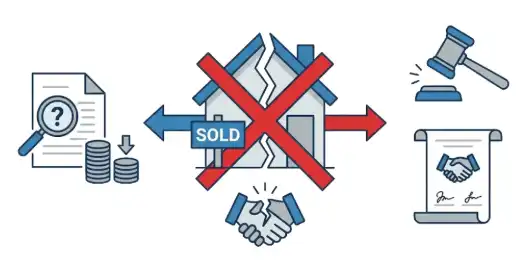
A firm deal is simply a binding contract. Like any contract, it can be breached. In 2026, with interest rates remaining elevated and strict municipal enforcement active in Brampton and Mississauga, failed closings have surged across Ontario. When a deal collapses on closing day, both sides face immediate financial losses, legal costs, and a dispute that can take years to resolve.
This guide explains exactly why deals are failing right now, what legal remedies are available to sellers when a buyer walks away, what remedies buyers have when a seller refuses to close, and how both sides can protect themselves before they ever reach closing day. Our real estate law team sees these situations regularly — this is what you need to know.
The “Firm Deal” Fallacy: Why a Signed Contract Is Not a Done Deal
The period between condition waiver and closing day is a legal and financial minefield. A buyer can have a pre-approval, a signed offer, and a moving truck booked — and still be unable to close. A seller can have spent the deposit in their head — and still not receive a single dollar if the buyer refuses to sign a release.
Understanding why deals fail, and what happens when they do, is the most important preparation any buyer or seller can do before signing an agreement of purchase and sale.
Top Reasons Real Estate Deals Fail to Close in Ontario (2026)
While buyer’s remorse is always a factor, the dominant causes of failed closings today are structural and financial. Here are the four most common.
1. The Appraisal Gap — The #1 Cause of Failed Closings in Ontario
This is the single most common reason real estate deals fail to close in Ontario right now. It works like this:
- You win a bidding war and sign a firm offer at $1.2 million.
- Your lender sends an appraiser two weeks before closing.
- The appraiser values the home at $1.1 million.
- The bank only lends against the appraised value, not the purchase price.
- You are suddenly short $100,000 with no time to find it.
A pre-approval is not a commitment. It is a conditional estimate based on stated income and credit. The lender’s appraiser has the final word on the property’s value, and in a flat or declining market, appraisals frequently come in below the offer price — especially in bidding-war situations where emotion drives prices above what comparable sales support.
This is especially common with pre-construction properties, where years pass between signing and closing. Read our detailed breakdown of appraisal shortfalls in Ontario pre-construction deals for how this plays out in that specific context.
Buyer Action: Never waive a financing condition until you hold a firm commitment letter — not just a pre-approval — from your lender. If your appraisal is tight, have a concrete, confirmed plan to cover the gap before you waive.
2. Illegal Basement Apartments and Title Defects
Peel Region — Brampton and Mississauga — has aggressively enforced basement apartment regulations throughout 2026. When a property is advertised with “income potential” or “two units,” the buyer’s lawyer conducts a title search during the requisition period. That search can uncover:
- An unregistered secondary suite that violates zoning bylaws
- An outstanding Order to Comply issued by the City of Brampton
- Building permit violations or unpermitted renovations
When a buyer discovers this, they typically demand either a price reduction or that the seller remediate the issue before closing. Legalizing a basement apartment in Brampton costs $30,000–$60,000 or more. When the seller refuses, the deal collapses into a dispute over who bears that cost.
See our guides on what happens when Brampton finds your illegal basement and how to legalize a basement apartment in Brampton in 2026 for the full picture.
3. Status Certificate Shock (Condo Buyers)
For condominium purchases, the Status Certificate is the equivalent of a title search — it reveals the financial and legal health of the condo corporation. Common deal-killers discovered in status certificates include:
- A pending Special Assessment — for example, $15,000–$25,000 per unit for a new roof or windows
- A chronically underfunded reserve fund that signals major assessments are coming
- Ongoing litigation against the condo corporation
Buyers who receive the status certificate late — after going firm — often attempt to back out by claiming the seller concealed a material fact. The resulting dispute frequently goes to court. Read the full breakdown in our guide to condo status certificate review for GTA buyers.
4. Title Fraud, Identity Theft, and Other Title Issues
Title problems are not limited to unpermitted basements. A title search may also surface:
- Undisclosed liens or judgments registered against the property
- Easements that restrict the buyer’s use of the land
- Ownership disputes or fraudulent prior transfers
Ontario buyers can protect themselves through proper due diligence and title insurance. See our guides on what title insurance covers in Ontario, uncovering hidden risks in title searches, and protecting yourself from real estate fraud in 2026.
Legal Remedies for Sellers When a Buyer Fails to Close in Ontario
When a buyer walks away from a firm deal, the seller faces immediate practical problems: a stigmatized listing, ongoing carrying costs — mortgage, property tax, utilities — and a deposit they may not be able to access for months. Here are the legal remedies available.
1. The Deposit Is Not Automatically Yours
Many sellers assume that if the buyer fails to close, the deposit is theirs to keep. This is incorrect.
Under Ontario real estate law, the deposit is held in the listing brokerage’s Trust Account. It can only be released in one of two ways:
- Both parties sign a Mutual Release; or
- A Court Order is obtained directing the brokerage to release the funds
If the buyer refuses to sign a Mutual Release — which they often do when they believe they have a legal defence — your deposit can be frozen in legal limbo for months or years while litigation unfolds. It does not move automatically upon default. For a full explanation of how deposits work and what happens to them in a dispute, see our guide: held in trust — a GTA realtor’s guide to the real estate deposit.
2. Suing the Buyer for the Price Difference (Damages)
If you re-list and sell the property for less than the original buyer agreed to pay, Ontario law entitles you to sue the defaulting buyer for the difference in price, plus:
- Legal fees incurred in the failed transaction and the litigation itself
- Carrying costs during the gap period — mortgage payments, property tax, utilities, insurance
- Re-listing costs, staging fees, and real estate commissions
Example: Buyer A agrees to purchase your home for $1.2M but fails to close. You re-list and sell to Buyer B for $970,000. You may sue Buyer A for the $230,000 difference, plus all carrying costs and legal fees incurred between the two closings.
Important limitation: Ontario law imposes a duty to mitigate. You must make a genuine, documented effort to sell the property at fair market value. You cannot sell below market and then claim the full difference from the defaulting buyer — courts expect you to try to minimize the loss.
3. Forfeiture of Deposit
Where the Agreement of Purchase and Sale contains an express clause allowing the seller to forfeit the deposit as liquidated damages upon buyer default, the seller may keep the deposit without needing to prove actual loss in court. Enforceability depends on the specific wording of the agreement and the circumstances of the breach. A real estate lawyer should review the default clause before you rely on it.
Legal Remedies for Buyers When a Seller Refuses to Close in Ontario
Sellers breach real estate deals less often than buyers, but it happens — particularly when prices rise sharply after a deal is signed and the seller receives a better offer or simply changes their mind. Ontario law gives buyers two primary remedies.
1. Specific Performance — Forcing the Sale
Specific performance is a court order compelling the seller to complete the transaction and transfer the deed at the agreed price. It is the most powerful remedy available to a buyer because it forces the seller to honour the contract rather than simply paying monetary compensation.
Ontario courts apply a high standard. Specific performance is generally only granted when the property is considered “unique” — meaning that monetary damages cannot adequately compensate the buyer. Courts have found uniqueness in:
- Specific waterfront or heritage properties that cannot be replicated
- Commercial real estate with location advantages tied to the specific parcel
- Properties with particular physical features unavailable elsewhere
For a standard subdivision home in Brampton or Mississauga, courts typically decline to grant specific performance and award monetary damages instead.
2. Return of Deposit Plus Monetary Damages
When the seller breaches, the buyer is entitled to:
- Full return of the deposit with interest where applicable
- Out-of-pocket costs: home inspection fees, legal fees, moving truck cancellations, storage costs
- Loss of bargain damages: if market prices have risen since the deal was signed, you can claim the difference between the contract price and the current fair market value of a comparable property
Example: You agreed to purchase a home in Brampton for $900,000. The seller backs out. Comparable homes now sell for $1,050,000. You may be entitled to claim the $150,000 difference plus all wasted costs.
See our guides on legal steps for buying a home in Brampton, buyer protection for home inspection defects in Ontario, and our full breakdown of the Agreement of Purchase and Sale for the protections that begin from the moment you sign.
The Mutual Release: Ontario’s Most Common Outcome for a Failed Deal
In 2026, Ontario courts are slow and litigation is expensive. A contested real estate lawsuit can take two to four years to resolve and cost each party $30,000–$100,000 or more in legal fees. Because of this reality, the most common outcome of a failed closing is a negotiated Mutual Release.
A Mutual Release typically works as follows:
- The buyer acknowledges they cannot — or will not — close.
- The seller agrees not to pursue litigation for the price difference.
- In exchange, the buyer consents to immediate release of the full deposit to the seller.
The result: the seller receives the deposit quickly and can re-list the property immediately. The buyer loses their savings but avoids a potentially ruinous lawsuit. Both parties sign the release and move on.
Negotiation Reality: The size of the deposit is the seller’s primary leverage in a Mutual Release negotiation. A larger deposit means a larger guaranteed recovery without the delay and cost of litigation. Asking for a 5–10% deposit upfront is increasingly standard advice for Ontario sellers in 2026 — it is your best insurance policy if the buyer walks.
For a full picture of the closing process and where these disputes arise, see our guides on the anatomy of a smooth closing and from offer to keys: the Ontario closing process explained.
Prevention Checklist: How to Protect Yourself Before Closing Day
For Buyers
- Get a firm commitment letter — not just a pre-approval — before waiving your financing condition. A pre-approval is conditional. A commitment letter is not.
- Understand the appraisal risk. In bidding-war situations, ask your mortgage broker explicitly what happens if the appraisal comes in short, and have a confirmed cash plan.
- Review the Status Certificate early for condo purchases. Do not leave this to the week before closing — leave yourself time to negotiate or walk away legitimately.
- Have your lawyer requisition title early to allow time to negotiate title defects before closing day, not on it.
- Know your full closing cost obligations well in advance — including land transfer tax and all other cash-due-on-closing items covered in our guide to closing costs for first-time home buyers in Ontario.
For Sellers
- Do not treat the deposit as received money until closing day is complete and funds are in your lawyer’s trust account.
- Demand a larger deposit upfront — ideally 5–10% of the purchase price. It is your primary financial protection against a buyer who walks.
- Disclose known defects. Non-disclosure of material facts creates legal liability that can survive closing and generate its own litigation.
- Resolve any title issues before listing — especially unregistered basements or outstanding municipal Orders to Comply in Brampton or Mississauga.
- Have your lawyer review the Agreement of Purchase and Sale, including the default clauses, before you accept any offer. See our guide on common buyer and seller mistakes in GTA transactions.
Frequently Asked Questions: Failed Real Estate Closings in Ontario
What happens to the deposit if a real estate deal fails to close in Ontario?
The deposit is held in the listing brokerage’s Trust Account and cannot be released without either a signed Mutual Release from both parties or a Court Order. If the buyer refuses to sign a release, the deposit can remain frozen for months or years during litigation. It does not automatically transfer to the seller upon default.
Can a seller sue a buyer for failing to close in Ontario?
Yes. If the seller re-lists and sells for a lower price, they can sue the original buyer for the price difference plus carrying costs (mortgage, taxes, utilities during the gap period), legal fees, and re-listing costs. The seller must make a genuine effort to sell at fair market value — this is the duty to mitigate — before claiming the full difference in damages.
What is specific performance in Ontario real estate?
Specific performance is a court remedy that forces a seller to complete the sale and transfer the deed at the agreed price. Ontario courts only grant this where the property is “unique” and money cannot adequately compensate the buyer. For standard residential homes in Brampton or Mississauga, courts typically award monetary damages instead.
What is a Mutual Release in Ontario real estate?
A Mutual Release is a negotiated agreement between buyer and seller to terminate a real estate contract. The buyer typically forfeits the deposit to the seller, and the seller agrees not to sue for additional damages. It allows the seller to re-list immediately and the buyer to avoid a large lawsuit. It is the most common resolution for failed closings in Ontario.
What is an appraisal gap and how does it cause a deal to fail?
An appraisal gap occurs when the lender’s appraiser values the property below the agreed purchase price. Since the bank only lends against the appraised value, the buyer must cover the shortfall in cash. If they cannot find those funds before closing, the deal fails. This is the most common cause of failed closings in Ontario in 2026.
What legal rights does a buyer have if a seller refuses to close in Ontario?
If a seller refuses to close, the buyer can pursue specific performance — a court order forcing the sale — or claim monetary damages including the full return of the deposit with interest, reimbursement of wasted costs such as legal and inspection fees, and loss of bargain damages if market prices have risen since the deal was signed.
Final Takeaway
A failed real estate deal is a financial and legal disaster for everyone involved. The winner in court often still loses years of time, tens of thousands in legal fees, and significant stress. Prevention — understanding your risks before signing — is always cheaper than litigation after the fact.
If your deal has already collapsed, or you are heading into a transaction and want to understand your position before you sign, contact GS Arora Law for a consultation. Our real estate law team works with buyers and sellers across Brampton, Mississauga, Caledon, and the Greater Toronto Area.
Disclaimer: The information provided in this blog is for general informational purposes only and should not be considered legal, tax, financial, or professional advice. Regulations and procedures may change over time and vary by jurisdiction. For guidance tailored to your specific situation, please consult a qualified professional.